

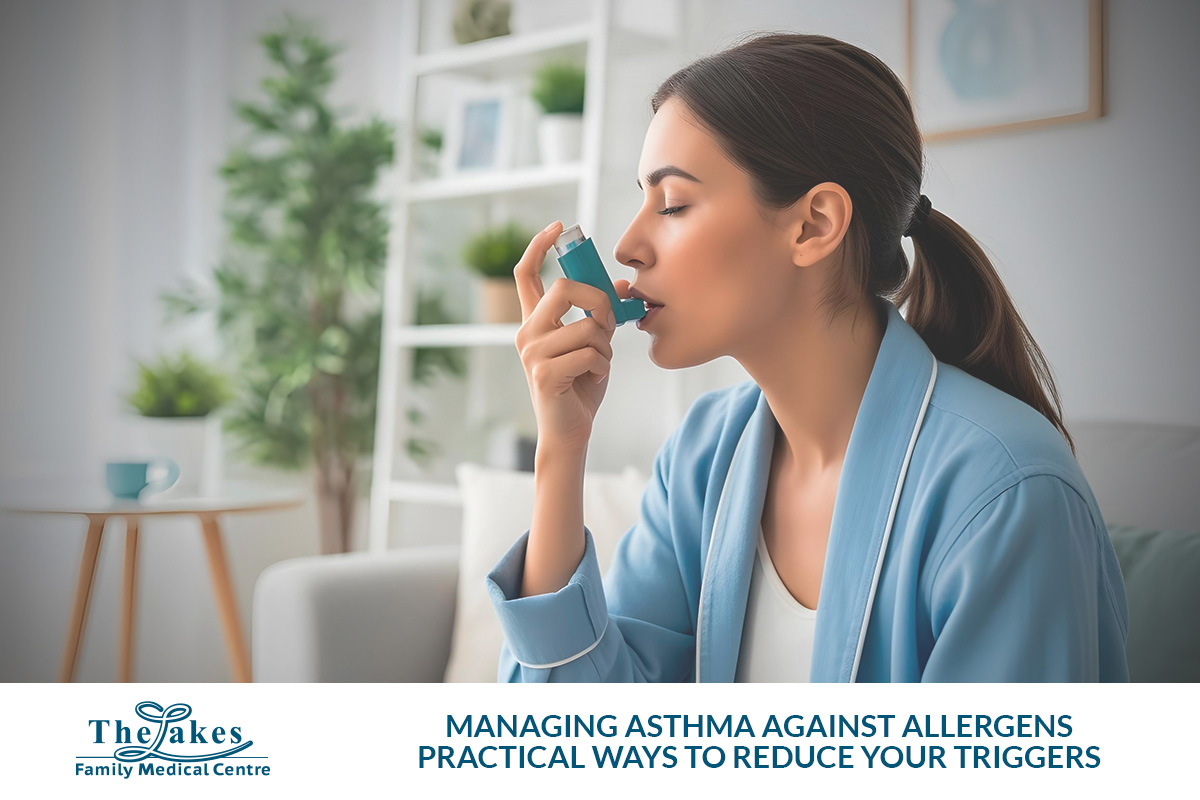
Asthma symptoms can feel unpredictable, especially when allergens trigger coughing, wheezing or shortness of breath. However, understanding your triggers can make asthma easier to manage.
Common allergens include house dust mites, pollen, mould and animal dander. Smoke and some chemicals can also worsen symptoms in sensitive people. Each person has different triggers, so effective asthma management starts with understanding your own pattern.
For people across Brisbane, Caboolture and surrounding areas, regular asthma reviews can help improve symptom control. Your GP can also review medicines, inhaler technique and your individual asthma management needs.
What Happens When Allergens Trigger Asthma?
Asthma affects the airways that carry air in and out of the lungs. In people sensitive to an allergen, exposure can irritate the airways.
The airway lining may swell. Muscles around the airways can tighten, making breathing more difficult. Symptoms may include coughing, wheezing, chest tightness and breathlessness.
Allergic triggers differ between people. One person may react strongly to pollen, while another may notice symptoms around pets or in damp environments.
Keeping track of when symptoms occur can help identify possible patterns.
Common Asthma Allergens to Watch For
Several allergens commonly contribute to asthma symptoms.
House Dust Mites
House dust mites are microscopic organisms commonly found in bedding, mattresses and soft furnishings.
People sensitive to dust mites may benefit from reducing exposure in sleeping areas. Washing bedding regularly and using appropriate dust-mite-resistant covers may help limit exposure.
Pollen
Pollen from grasses, trees and other plants can trigger symptoms in some people with asthma or hay fever.
Symptoms may become more noticeable during high-pollen periods. Keeping doors and windows closed when pollen levels are high may help some people reduce exposure.
People with asthma and hay fever should discuss symptom control with their GP, particularly when seasonal changes affect breathing.
Mould
It grows in damp or poorly ventilated areas. Mould spores can become airborne and may trigger asthma symptoms in sensitive people.
Addressing visible moisture problems and improving ventilation can help reduce mould growth. Persistent dampness may need further investigation.
Animal Dander
Animal dander includes tiny particles from skin, saliva and other substances produced by animals.
For people with allergies, close exposure to pets may trigger symptoms. Keeping pets out of bedrooms can reduce exposure in sleeping areas.
Know Your Personal Asthma Triggers
Not every person with asthma reacts to the same allergens.
Triggers may also include respiratory infections, smoke, air pollution, exercise or cold air. Some people have several triggers working together.
A simple symptom diary can help you recognise patterns. Record:
- Where symptoms occurred
- What you were doing
- Weather or seasonal conditions
- Exposure to pets, dust or smoke
- How often you needed reliever medication
Share this information with your GP during an asthma review.
Good Asthma Control Matters
Avoiding every possible allergen is rarely realistic. Effective asthma care focuses on reducing important triggers while maintaining good overall asthma control.
Use asthma medicines exactly as prescribed. Check your inhaler technique regularly because correct use helps medicine reach the airways effectively.
You should also understand your asthma action plan and know what to do when symptoms worsen.
Do not stop or change prescribed asthma medicine without medical advice.
When Should You Speak With a GP?
Arrange a medical review when asthma symptoms become more frequent or begin affecting daily activities.
You should also seek advice when you:
- Wake at night because of asthma symptoms
- Need reliever medicine more often than usual
- Experience increasing wheezing or breathlessness
- Notice new or changing triggers
- Feel your current asthma plan is no longer working well
Severe breathing difficulty requires urgent medical attention.
Take Control of Asthma and Allergens
Managing asthma against allergens starts with understanding what affects your breathing.
Reducing exposure to important triggers, taking medicines as prescribed and reviewing asthma regularly can support better symptom control. Your asthma plan should suit your health, lifestyle and individual triggers.
Take the Next Step Towards Better Asthma Control
Asthma symptoms should not be ignored or simply accepted as part of daily life. Regular GP reviews can help identify changing triggers and support better asthma management.
Lakes Family Medical Centre provides ongoing asthma care, health assessments and chronic condition support for individuals and families. Our team works with patients to build practical, personalised healthcare plans that support everyday wellbeing and long-term respiratory health.
*This article is for general information only. Do not consider it as a professional medical advice. Seek doctor’s appointment whenever required.
Learn more about The Lakes Family Medical Centre :