

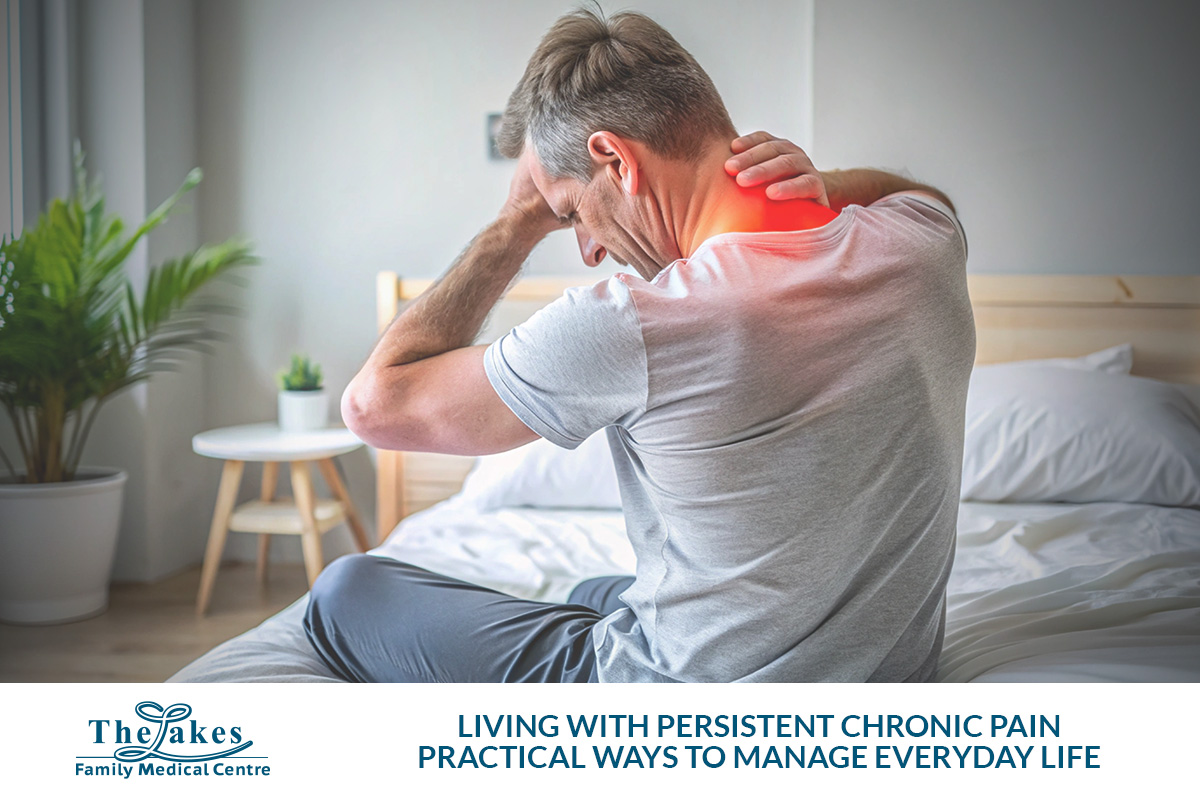
Living with persistent chronic pain can change how you work, sleep, exercise and enjoy daily life. Pain may continue even after an injury heals. It may also occur alongside arthritis, back conditions, nerve problems or other long-term health concerns.
Persistent pain affects more than one area of life. It can influence physical strength, sleep, concentration, emotions, relationships and social activity. Everyone experiences pain differently, which means pain management should reflect the individual.
For people across Brisbane, Caboolture and surrounding communities, ongoing GP care can provide an important starting point. A GP can help review symptoms, medicines and daily challenges while coordinating other healthcare support when appropriate.
What Is Persistent Chronic Pain?
Persistent pain generally refers to pain that continues for more than three months. It may remain after the original injury has healed or continue without a clear ongoing cause.
Pain can appear in many forms. Some people describe aching or throbbing sensations. Others experience burning, shooting, stabbing or electric-like pain.
The intensity may also change from day to day. Sleep, activity, stress and emotional wellbeing can influence how a person experiences pain.
Living with persistent pain does not mean giving up on an active and meaningful life. A combination of medical support, movement and practical self-management strategies can help many people live better with pain.
How Chronic Pain Can Affect Everyday Life?
Persistent pain can create a cycle that becomes difficult to manage.
Pain may reduce physical activity. Reduced movement can then affect strength and fitness. Poor sleep can increase fatigue, while ongoing discomfort can affect mood and concentration.
Some people also withdraw from social activities because they worry about increasing their pain. Others may find work, household tasks or family responsibilities more difficult.
These experiences are real and deserve attention. Good pain management looks beyond a single symptom and considers the whole person.
Keep Moving at a Manageable Pace
When movement hurts, avoiding activity can feel like the safest option. However, long periods of inactivity may reduce fitness and physical function.
A gradual approach often works better.
Start with manageable activities and increase them slowly. Walking, gentle stretching, swimming and individually suitable strengthening exercises may support mobility.
The right activity depends on your health, pain condition and current ability. A GP or allied health professional can help guide safe activity choices.
Pacing also matters. Avoid completing every demanding task on a good day and then needing several days to recover. Breaking activities into smaller steps may create a more sustainable routine.
Build Better Sleep Habits
Pain and sleep problems can influence each other. Pain may make it difficult to fall asleep or stay asleep. Poor sleep can also make coping with pain harder.
Try to maintain regular sleeping and waking times. Create a quiet sleeping environment and reduce stimulating activities before bed.
Speak with your GP when pain regularly disrupts sleep. Your overall health, medicines and other sleep concerns may need review.
Look After Your Mental Wellbeing
Persistent pain can affect mood, motivation and confidence. Frustration, anxiety and low mood can occur when pain interferes with work, relationships or independence.
Mental health support can form an important part of chronic pain management.
Relaxation strategies, mindfulness and psychological support may help people manage stress and develop practical coping skills. Staying socially connected also matters.
Talking about the emotional effects of pain is not a sign of weakness. It gives your healthcare team a clearer picture of your overall wellbeing.
Understand Your Pain Medicines
Medicines may form one part of a broader pain management plan.
Take medicines exactly as prescribed and discuss concerns with your GP or pharmacist. Do not stop or change prescribed pain medicines without medical advice. Better Health Channel guidance also recommends discussing medicine changes with your doctor.
Regular medicine reviews can help assess benefits, side effects and whether the treatment plan still suits your needs.
Pain management may also involve exercise, physiotherapy, psychological strategies and changes to daily routines. The most suitable combination depends on the individual.
Track Patterns and Set Realistic Goals
A simple pain diary can provide useful information.
Record:
- Pain levels and where pain occurs
- Activities that improve or worsen symptoms
- Sleep quality
- Medicines taken
- Mood and stress levels
- Activities you could complete that day
Look for patterns rather than focusing only on a single difficult day.
Goal setting can also support progress. Choose realistic goals that focus on function.
For example, your goal might involve walking for ten minutes, preparing a meal or attending a social activity. Small achievements can build confidence and help you measure meaningful progress.
When Should You Speak With Your GP?
Arrange a medical review when pain continues, changes significantly or interferes with daily life.
You should also seek advice when:
- Pain affects your sleep regularly
- Your mobility or strength declines
- Pain affects work or household activities
- You feel increasingly anxious or low
- You have concerns about pain medicines
- New symptoms appear
Some symptoms require urgent medical attention. Seek prompt help for severe or sudden pain, significant weakness, serious injury or other concerning new symptoms.
Living Well with Persistent Pain
Persistent chronic pain can present real challenges, but pain does not have to define every part of your life.
A practical management plan may combine regular medical reviews, suitable movement, pacing, better sleep habits and mental health support. Maintaining relationships and meaningful activities can also support overall wellbeing.
Progress may look different for each person. For some, improvement means returning to work. For others, it means walking further, sleeping better or joining family activities again.
The aim is to build a realistic plan that supports your health and daily function.
Support for Persistent Pain and Long-Term Health
Living with persistent chronic pain can feel isolating, especially when symptoms are not visible to others. You do not have to manage every challenge alone.
At Lakes Family Medical Centre, our GPs provide ongoing healthcare support for patients across Caboolture, Brisbane North and surrounding areas. We can help review symptoms, discuss treatment concerns and support a coordinated approach to long-term health management.
Regular healthcare reviews can help you understand your condition, recognise changes and make informed decisions about your ongoing care.
*This article is for general information only. Do not consider it as a professional medical advice. Seek doctor’s appointment whenever required.
Learn more about The Lakes Family Medical Centre :